
Linen Tablecloth: How to Choose, Compare & Care
Linen has a distinctive way of changing a dining table without making it feel overly formal. Its natural texture, soft drape and slightly relaxed appearance work equally well for everyday meals and special occasions.
Choosing the right linen tablecloth involves more than picking a colour. Composition, size, shape, weave and care requirements all influence how the fabric looks and performs. This guide explains the main differences and helps you choose a tablecloth that suits both your table and the way you use it.
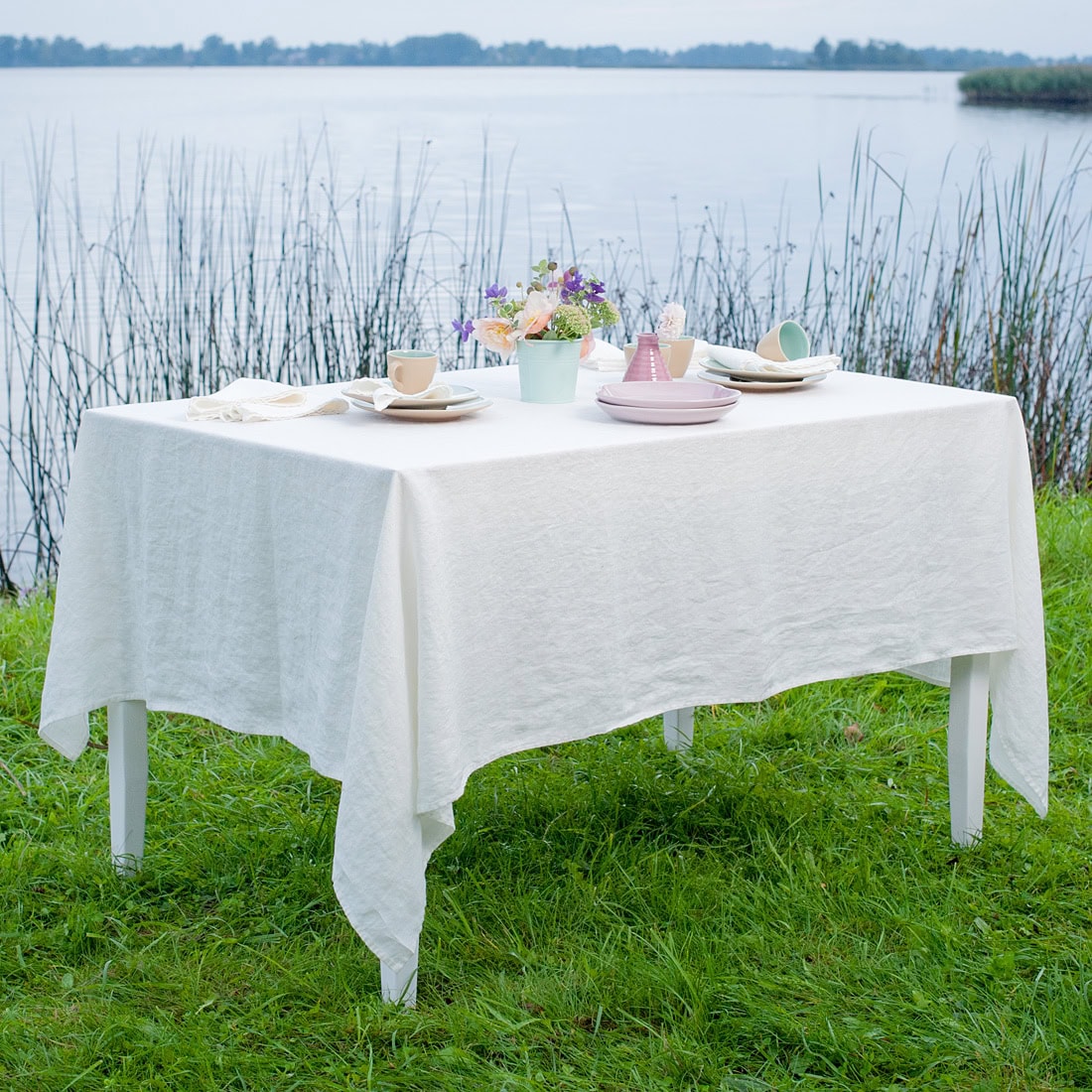
What Is a Linen Tablecloth, and What Makes It Distinctive?
Linen is a natural textile made from fibres of the flax plant. If you would like more background on the fibre, read what linen is made from.
A 100% linen tablecloth has linen’s characteristic texture and appearance, while some tablecloths combine linen with cotton for a different feel and structure. Linen’s visible texture gives it a natural look that becomes more relaxed with use and washing. It suits tables where you want the fabric to feel welcoming rather than overly polished.
How Does Linen Feel and Look on a Dining Table?
Linen generally has more visible texture than cotton or polyester. Depending on the weave and finish, it may initially feel crisp or already feel softer if the fabric has been washed. On the table, linen has a natural drape, and small creases are part of its character.
Colour and construction make a significant difference. Plain natural linen creates a calm setting, while jacquard patterns, checks, stripes, decorative borders or hemstitching can make the same material feel more refined. For a seasonal styling example, see our guide to choosing a linen tablecloth for an Easter table.
Linen Fashion offers both 100% linen and linen-cotton tablecloths, including plain, checked and jacquard designs manufactured by AB Siūlas in Lithuania.
Linen vs. Cotton and Polyester Tablecloths: Which Suits Your Needs?
There is no single fabric that is right for every home. The best choice depends on the appearance you prefer and how you plan to use your tablecloth.
| Material | Main characteristics | Good choice when you want |
|---|---|---|
| Linen | Natural texture, relaxed appearance and visible weave | A distinctive table setting made from natural fibres |
| Cotton | Smoother and generally more uniform in appearance | A familiar, soft everyday textile |
| Polyester | Synthetic and generally more resistant to creasing | Minimal ironing and simple maintenance |
| Linen-cotton | Combines characteristics of two natural fibres | A balance between linen texture and a different, often softer handle |
Rather than choosing only by the fibre name, look at the product specification. Fabric weight, weave, finishing and composition can make two tablecloths with similar fibre content feel quite different.
Is Linen Better Than Cotton for a Tablecloth?
Not necessarily. Cotton usually has a smoother appearance and may feel softer when new. Linen generally has more texture and a more relaxed drape. If you prefer a very smooth table setting, cotton may suit you better. If you enjoy visible natural texture and do not mind some creasing, linen may be more appealing.
Linen-cotton tablecloths offer a middle ground if you want some of linen’s character with a different feel. Check the stated fibre composition rather than assuming every tablecloth described as linen is made from 100% linen.
How Does Linen Compare with Polyester?
Polyester is a synthetic fibre that generally wrinkles less and can be convenient when minimal ironing is the main priority. It tends to maintain a more uniform appearance.
Linen behaves differently: its texture, slight irregularity and natural creasing are part of its look. Choose linen when natural fibres and a relaxed appearance matter most to you. Choose polyester when wrinkle resistance and easy maintenance take priority.
How to Choose and Care for a Linen Tablecloth
Start with the practical details before deciding on colour or pattern:
- Table shape and dimensions
- Desired overhang
- Fabric composition and weight
- Weave or pattern
- Edge finish
- Washing instructions
A tablecloth can look beautiful but still feel wrong if it is too short, excessively long or unsuitable for the way you use your table. A simple weave can be practical for everyday use; jacquard weaving, lace, piping or hemstitching can add visual interest to a more decorative setting.
How Do You Choose the Right Tablecloth Size?
Measure the length and width of your table, then decide how far you want the cloth to hang over each edge. For a rectangular table, use these simple calculations:
- Tablecloth length = table length + twice the desired drop
- Tablecloth width = table width + twice the desired drop
For example, a 160 × 90 cm table with a 25 cm drop on each side needs a cloth measuring 210 × 140 cm: 160 + 25 + 25 = 210 cm long, and 90 + 25 + 25 = 140 cm wide.
For a round table, measure the diameter and add the drop twice. A shorter overhang feels more casual; a longer one can look more formal. Browse round and oval linen tablecloths when those shapes suit your table, and compare your measurements with the dimensions on each product page.
How Should You Wash and Store a Linen Tablecloth?
Always follow the individual product’s care instructions, which can vary with colour, weave and finishing. As general habits, use an appropriate gentle detergent, avoid overloading the washing machine, remove the cloth promptly after washing and reshape it before drying. Iron according to the label if you prefer a smoother appearance; perfect ironing is not essential to linen’s relaxed look.
Store the tablecloth only when it is clean and completely dry. Fold it and keep it in a dry, ventilated place. For broader guidance, see the Linen Care guide.
Why Consider Linen Fashion for a Linen Tablecloth?
Linen Fashion is the official online store of Lithuanian linen manufacturer AB Siūlas. The factory is located in Biržai, Lithuania, and the tablecloths offered by Linen Fashion are manufactured by AB Siūlas in Lithuania. Read more About Linen Fashion.
The collection includes 100% linen and linen-cotton tablecloths in different constructions and decorative styles. Depending on the design, you can find plain weaves, checks, jacquard patterns, dobby structures, decorative borders and different shapes. Browse linen tablecloths and use the product specifications—fibre composition, colour, weave or pattern, fabric weight and finishing—to compare the actual products.
Choose a Tablecloth That Feels Right for Your Home
Think about how often you will use the tablecloth, how formal you want the setting to feel, how much texture you prefer and the care you are comfortable with. White linen can create a classic look; natural tones feel warmer and more relaxed, while checks, stripes and woven patterns add colour and character.
The right tablecloth is the one that fits your table, your interior and the way you actually use your dining space.
Explore Linen Tablecloths
Discover linen and linen-cotton tablecloths in different colours, weaves, patterns and sizes, manufactured in Lithuania by AB Siūlas.
Frequently Asked Questions
Is a linen tablecloth suitable for everyday use?
Yes. Linen tablecloths can be used for everyday dining as well as special occasions. For frequent use, choose a size, colour and finish that fit your normal washing routine and dining habits.
Does a linen tablecloth wrinkle easily?
Linen naturally develops creases. Many people consider this part of its characteristic appearance. If you prefer a smoother finish, follow the ironing instructions supplied with the product.
Can you machine wash a linen tablecloth?
Many linen tablecloths can be machine washed, but always follow the instructions for the individual product.
What is a linen tablecloth made from?
A pure linen tablecloth is made from flax-derived linen fibres. Some tablecloths combine linen with cotton, so check the stated fibre composition before buying.